What Are the Most Common Solar Panels Installation Mistakes Melbourne Homeowners Make?
Avoid the most common solar installation mistakes in Melbourne by choosing the right system design, quality components, and an accredited installer to maximise long-term energy savings and performance.
There is an old saying in the trades: measure twice, cut once. When it comes to solar, the equivalent wisdom is design once, design it right. A solar system is not a toaster. It is a long-term energy asset with a lifespan of 25 to 30 years, and every decision made at the design stage shapes how well it performs across every one of those years. The problem is that many Melbourne homeowners go into the process without knowing what the right questions are, which makes it easy to end up with a system that underperforms, costs more than it should, or creates expensive headaches down the line. The most common solar panels installation Melbourne mistakes are not obscure technical errors. They are predictable, avoidable, and often the direct result of choosing speed or price over the quality of the design process itself. Here is what to watch out for.
Mistake #1: Getting Panel Orientation Wrong From the Start
In Australia, solar panels perform best when they face true north. This is not a general guideline. It is the single most important orientation decision in a residential solar design, because a north-facing array receives the maximum amount of direct sunlight across the full arc of the day, from morning through to late afternoon. East or west-facing panels, by contrast, produce 15 to 25 percent less energy than north-facing panels across the year.
The common mistake here is not that homeowners choose the wrong orientation deliberately. It is that the roof layout is accepted as a given without exploring alternatives. Many Melbourne rooftops have multiple roof planes at different orientations, and a good solar designer will assess each plane and recommend the optimal combination rather than simply placing panels wherever there is space. Deviations of 15 to 30 degrees from true north cause only around 3 to 5 percent efficiency loss and are perfectly acceptable compromises. But a system placed entirely on an east-facing plane because it was easiest to install is a system that will underdeliver for its entire life.
Tilt angle matters too. Melbourne sits at approximately 37 degrees south latitude, which means a panel tilt of around 30 to 37 degrees maximises annual energy capture. Roofs with very low pitch or perfectly flat surfaces may benefit from tilt frames to bring panels closer to the optimal angle, particularly through the lower-sun winter months when maximising generation matters most.
Mistake #2: Underestimating the Impact of Shading
Shading is the single most underestimated factor in residential solar design, and it is consistently responsible for systems that perform well below their rated capacity. The reason shading is so damaging comes down to how traditional solar strings work. In a standard string inverter configuration, panels are wired in series. When one panel is shaded, it restricts current flow through the entire string, meaning the shaded panel drags down the output of every panel connected to it, not just itself.
The sources of shading in Melbourne are often more varied than homeowners expect. Trees that are bare in winter and fully leafed in summer create seasonal shading patterns that change throughout the year. Neighbouring buildings, pergolas, chimneys, and roof vents all cast shadows that shift with the sun’s position. Even a single tree branch crossing one corner of a panel at certain times of day can produce a measurable impact on system output.
A professional site assessment includes a shading analysis using specialist tools that model shadow movement across the roof at every hour of every day throughout the year. Skipping this step, or accepting a quote that doesn’t include it, is one of the most reliable ways to end up with a solar system that disappoints. Where shading is unavoidable, technologies like microinverters or DC optimisers can significantly reduce its impact by allowing each panel to operate independently rather than dragging the entire string down.
Mistake #3: Sizing the System Based on Price Rather Than Your Actual Energy Usage
The most commonly installed solar system size in Victoria is 6.6 kilowatts, and for good reason. A 6.6kW system generates approximately 23.8 kilowatt hours per day on average across the year, which closely matches the typical Melbourne household consumption of 18 to 25 kilowatt hours per day. For a household with that usage profile, a 6.6kW system strikes the right balance between upfront cost and return.
The mistake happens when homeowners choose a system size based primarily on what fits the budget rather than what matches their actual consumption. A household running a ducted reverse-cycle air conditioning system, an electric hot water service, and a home office with multiple devices will have very different energy needs from a household running a small split system and minimal appliances. If the system is too small, you are buying more grid electricity than you need to. If it is oversized without battery storage, you are generating power that gets exported to the grid at feed-in tariff rates that have declined sharply since the Essential Services Commission removed minimum rate requirements from 1 July 2025.
The right starting point is always a detailed analysis of your household’s actual electricity bills, ideally across 12 months to capture seasonal variation. An honest, data-driven system design begins there, not with what fits neatly on the truck.
Mistake #4: Treating the Inverter as an Afterthought
Most homeowners focus almost entirely on solar panels when comparing quotes, and pay relatively little attention to the inverter. This is a mistake that can cost significantly in performance and reliability. The inverter is the brain of a solar system. It converts the direct current electricity your panels generate into the alternating current your home uses, and its quality, configuration, and compatibility with your panel layout shapes everything the system does.
One of the most common inverter mistakes is incorrect string sizing. In systems with panels on multiple roof orientations, each string of panels produces power at different times and at different voltages depending on which direction it faces. If those strings are wired into a single MPPT input on the inverter without accounting for the orientation mismatch, the inverter will average the performance across mismatched inputs, dragging down output from the better-performing panels. Quality inverters with multiple MPPT inputs, like those in the Fronius GEN24 and Sungrow ranges, allow each string to operate independently and maximise what each roof plane generates.
Oversizing the panel array relative to the inverter’s capacity is another common error. The total rated panel output cannot exceed the inverter manufacturer’s specifications if the system is to qualify for Australia’s Small-scale Renewable Energy Scheme rebate. Getting this ratio wrong means either losing access to the rebate or leaving panel capacity that cannot be used.
Mistake #5: Ignoring the Switchboard Until It Becomes a Problem
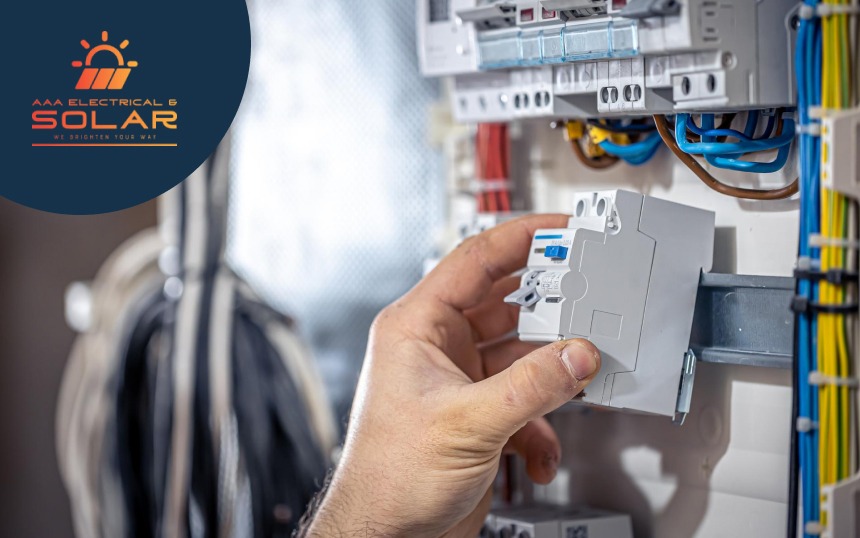
Switchboard compatibility is one of the most frequently overlooked elements in the solar design conversation, and it tends to surface at the worst possible moment: after a contract has been signed and an installation date has been set. To install a solar system, the switchboard must have at least two spare circuit breaker spaces for the solar circuit and isolator. Older Melbourne homes, particularly those with fuse wire boards or outdated switchgear, frequently do not meet this requirement and need an upgrade before the solar installation can proceed.
Switchboard upgrade costs in Victoria typically range from $800 to $3,500 for a standard residential upgrade, and from $2,000 to $4,500 or more where solar and electric vehicle charging integration is involved. For homeowners who were not told to expect this cost upfront, it can feel like a nasty surprise at the end of a process they thought was already settled.
For solar panels in Melbourne to be installed correctly and safely, the switchboard must meet the requirements of AS/NZS 3000 and Energy Safe Victoria guidelines. At AAA Electrical & Solar, the team includes licenced electricians who assess switchboard compatibility as part of every solar consultation, ensuring there are no unexpected costs discovered on installation day.
Mistake #6: Designing a System Without Accounting for the Feed-In Tariff Shift
The economics of solar in Victoria shifted significantly on 1 July 2025, when the Essential Services Commission stopped setting minimum feed-in tariff rates. Electricity retailers can now set their own tariffs, and the minimum rate effectively dropped to near zero. For Melbourne homeowners who designed systems in earlier years based on assumptions of meaningful export income, that shift has changed the financial return calculation considerably.
What this means for anyone designing a system today is that maximising self-consumption of solar energy is more important than maximising total system output. A large system that exports the majority of its generation to the grid at near-zero rates will not return what the same system paired with a battery would. Battery storage now allows households to capture excess midday solar generation and use it in the evening when consumption is highest and grid electricity rates are at their peak.
The Victorian Government’s battery rebate program, still active in 2026 for households with a combined income below $150,000, can significantly reduce the upfront cost of battery storage. Only Clean Energy Council-approved batteries installed by SAA-accredited battery installers qualify for the rebate, which is another reason why choosing the right installer from the start matters as much as choosing the right panels.
Mistake #7: Choosing an Installer Based on Price Alone
The solar industry in Australia is heavily regulated for good reason. A poorly designed or incorrectly installed system is not just an underperforming asset. It is a safety risk. Solar Accreditation Australia (SAA), which took over the accreditation role previously held by the Clean Energy Council, is now the primary body responsible for accrediting solar installers and designers. Working with an SAA-accredited installer is a requirement for accessing the federal Small-scale Renewable Energy Scheme rebate and any applicable Victorian government incentives.
The quality of solar panels installation Melbourne homeowners invest in is directly tied to the knowledge and professionalism of the team carrying out the design and installation. A quote that appears significantly cheaper than others in the market often reflects corners cut in the design process, the use of lower-quality components, or a lack of proper site assessment. These are not savings that hold up over the life of the system.
At AAA Electrical & Solar, every installation is carried out by licensed electricians with deep experience in Melbourne’s specific roof types, grid connection requirements, and local council standards. The team supplies and installs leading panel brands including Aiko, Jinko, Trina, LONGi, and Astronergy, paired with quality inverters from Sungrow, Fronius GEN24, Sigenergy, and GoodWe, and battery systems including the Tesla Powerwall 3, Alpha ESS, and FoxESS. No shortcuts in the equipment and no shortcuts in the installation.
The Bottom Line
A solar system designed well from the start pays dividends for decades. One that cuts corners at the design stage costs more than the savings it was supposed to generate. Getting the orientation right, assessing shading properly, sizing the system to actual usage, choosing the right inverter configuration, confirming switchboard compatibility upfront, planning for battery storage in the current feed-in tariff environment, and working with an accredited installer: these are not extras. They are the baseline for a system that actually delivers what it promises.
For the quality solar panels installation Melbourne homes deserve, the team at AAA Electrical & Solar brings the technical expertise, licensed professionals, and honest design process to get it right from day one. If you are considering solar for your home and want a system designed to perform for the long haul, call 1300 222 367 for a free consultation and site assessment.
Get Your Free Solar Design Assessment Today